Pregnancy
The Vampire Prince’s BridePregnancy is a recurring state rather than a single plot event in the book. It appears across human, werewolf, alien, and vampire-related storylines, repeatedly converting private intimacy into public danger or obligation. A pregnancy may reveal a concealed relationship, test whether a species can reproduce, alter a character’s value within an exploitative social system, or create a future that forces lovers and enemies alike to choose between control and protection.
Discovery and Recognition
Pregnancy is often recognized belatedly, through bodily changes that characters initially misread. Danita Valdez notices weight gain but attributes it to the large amount of carbohydrates she has been eating; only when the reality becomes unavoidable does she smooth her sunshine-yellow dress over her rounded stomach and understand that she is pregnant. Her discovery immediately changes the meaning of the danger surrounding Dean McGrath. Killian Flanagan had been concentrating on what McGrath might do and had momentarily forgotten the pregnancy, but the sight of Danita’s stomach restores the fact as both a source of terror and a cause for joy.
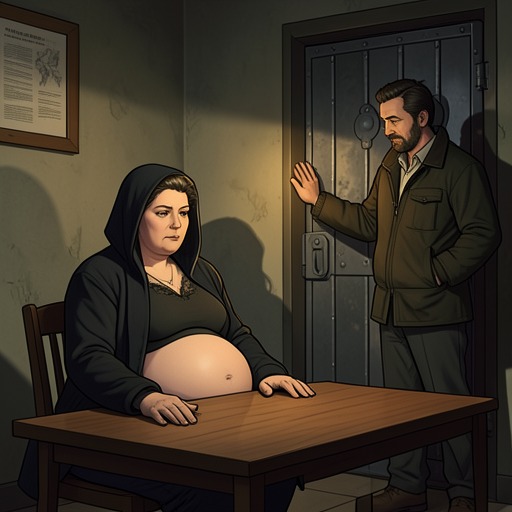
The pregnancy also becomes a weapon within McGrath’s coercive economy. He had ordered Killian Flanagan and Ryan Higgins to watch Miss Valdez, then angrily demanded to know why that surveillance had resulted in her becoming pregnant. His concern is not simply paternal or medical: he complains that Killian’s interference with Danita’s farm might be forgiven, while pregnancy has lowered her “market value.” In this context, pregnancy is treated as an economic injury by a man who evaluates Danita through debt, sexual exploitation, and the threatened sale of her virginity. The condition therefore exposes the brutality of the system surrounding her even as it strengthens the emotional and protective bond among Danita, Killian Flanagan, and Ryan Higgins.
Other pregnancies are announced more directly but remain emotionally difficult. Clara Maddison becomes pregnant after a period in which things had been going well, yet morning nausea forces her to reconsider what she has been experiencing. She has no idea how to tell Nathaniel Snyder, and eventually says, “Nate, I’m pregnant,” watching his expression for a reaction. Her pregnancy is set against the already established presence of their six-month-old daughter Riley, whose father’s genes have allowed her to develop mobility much faster than an average child. Pregnancy in this storyline is consequently both a new beginning and an extension of an existing family’s unusual hereditary condition.
Pregnancy Across Species
Pregnancy carries different biological meanings in different communities. Gemma’s pregnancy with Shay is significant because Shay should not have been able to father children. The disease that had afflicted his people had left his genetic material too weak for reproduction, making the scan’s conclusion astonishing: the child Gemma carries is undeniably his. The medical examination brings a decisive reversal from presumed infertility to confirmed fatherhood. The baby is three months into development, appears perfectly healthy, and has caused no unexpected health effects for Gemma. Shay’s relief and joy are therefore inseparable from a biological revelation that changes what he believes possible for his own body and people.
Gemma remembers that Shay reacted with extraordinary happiness when she told him. He danced around the apartment, while she had been afraid that he might respond badly. Her fear was not fear of motherhood; she had always known that she wanted a child. It was fear of how the pregnancy might affect the relationship. The pregnancy thus tests attachment rather than merely announcing reproduction: Gemma anticipates rejection, but Shay’s joy confirms the bond between them and turns an uncertain disclosure into shared hope.
The book also treats pregnancy as a source of species-related anxiety. Gemma asks whether the baby will eat its way out of her, whether she will have a two-week pregnancy, or whether she will lay an egg. These questions express the gap between human expectations and alien or cross-species biology. Pregnancy is not presented as a uniform natural process; it becomes a frontier of uncertainty in which the pregnant body must negotiate unfamiliar reproductive rules, accelerated development, and fears of bodily transformation.
Among the werewolf characters, pregnancy is connected to pack continuity and succession. Siobhan urges Harrod Ford to win his Alpha trial for her and for the child inside her, making the unborn child part of the political and physical stakes of his recognition. When Harrod succeeds, his father announces both a new union for the new Alpha and the growth of the pack through the pregnancy. The child is therefore not only a private descendant but evidence that the pack’s future is being secured through Harrod Ford’s accepted leadership and union with Siobhan.
Protection, Care, and Control
Pregnancy changes everyday behavior as much as it changes formal relationships. At seven months, Danita is no longer allowed to do anything by herself. The restrictions annoy her, yet she also finds them sweet. She repeatedly tries to sneak away and continue her work, turning the struggle into a game in which she measures how far she can go before Killian Flanagan and Ryan Higgins catch her. Their vigilance expresses care, but Danita’s attempts to evade it preserve her independence. The scene gives pregnancy a concrete domestic rhythm: protection can become overprotection, and affection can be negotiated through playful resistance rather than solemn declarations.
The physical condition is likewise represented through immediate bodily sensation. Danita wakes before the alarm because little feet are kicking her ribs. Rubbing her stomach produces still more kicking, while the need to use the bathroom forces her to maneuver carefully between her two partners. The pregnancy is consequently experienced as movement, interruption, and spatial negotiation. It reorganizes the bedroom, the morning routine, and the conduct of the adults around the unborn child.
The pregnancy of Alice is embedded in a different form of danger. An enchanted knife intended to kill both a witch and a vampire had been placed on Alice’s side of the bed, and Matheus Lindgern recognizes that the attack was not aimed at him alone. The threat therefore reaches both partners and the unborn child associated with their household. Later, Matheus removes nobles who will not obey his rules, while Alice teaches students about the varying effects of love potions with her baby daughter in her arms. Her pregnancy and motherhood exist alongside political consolidation and magical education, linking reproduction to the construction of a safer domestic and institutional future.
Birth, Hope, and Consequence
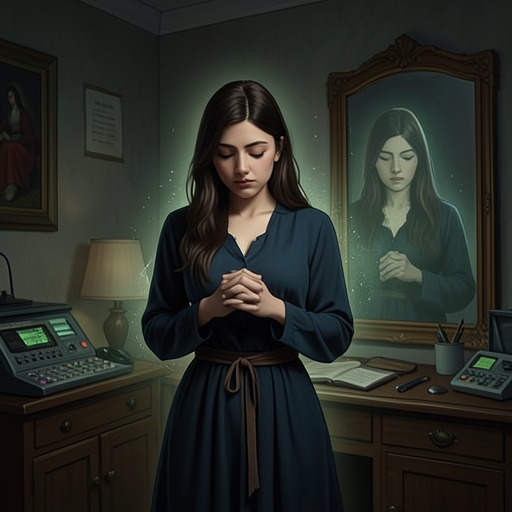
In the later vampire storyline, pregnancy is first treated with disbelief by others. A strange cramp and warmth in the stomach are initially attributed to vampire food, and when others suggest that the character is pregnant, the idea is mocked as ridiculous. Yet she eventually leaves the Fort, buys a pregnancy test at a pharmacy, and returns to her apartment hoping desperately for a positive result. The test confirms the pregnancy. She calls out to Valnoir, then tells him directly that she is pregnant, later insisting that the other women had been right. The sequence moves from bodily ambiguity, through social ridicule, to self-directed confirmation and public acknowledgment.
That pregnancy advances to a clear temporal milestone: eight months later, on a Thursday, the character says that her water has broken. The narrative then turns from anticipation to labor. She screams, pushes, and finally gives birth to a baby. The delivery supplies the strongest value shift attached to pregnancy in the evidence: uncertainty becomes confirmation, captivity or dependence gives way to an immediate maternal future, and the imagined child becomes a living presence.
Across these storylines, pregnancy repeatedly converts hidden information into irreversible consequence. It reveals that Killian Flanagan and Ryan Higgins have become fathers with Danita Valdez; proves that Shay can father Gemma’s healthy child despite the infertility associated with his disease; confirms a new werewolf union and the growth of Harrod Ford’s pack; places Alice and her child within the scope of a magical assassination attempt; and culminates in the birth of Valnoir’s child. The recurring state is therefore both intimate and structural. It makes love visible, gives enemies leverage, binds bodies to lineage, and turns the future into a presence that characters must protect, fear, or accept.